Judicial Sex-Leveling and the Decline of VMI: A Retrospective on United States v. Virginia
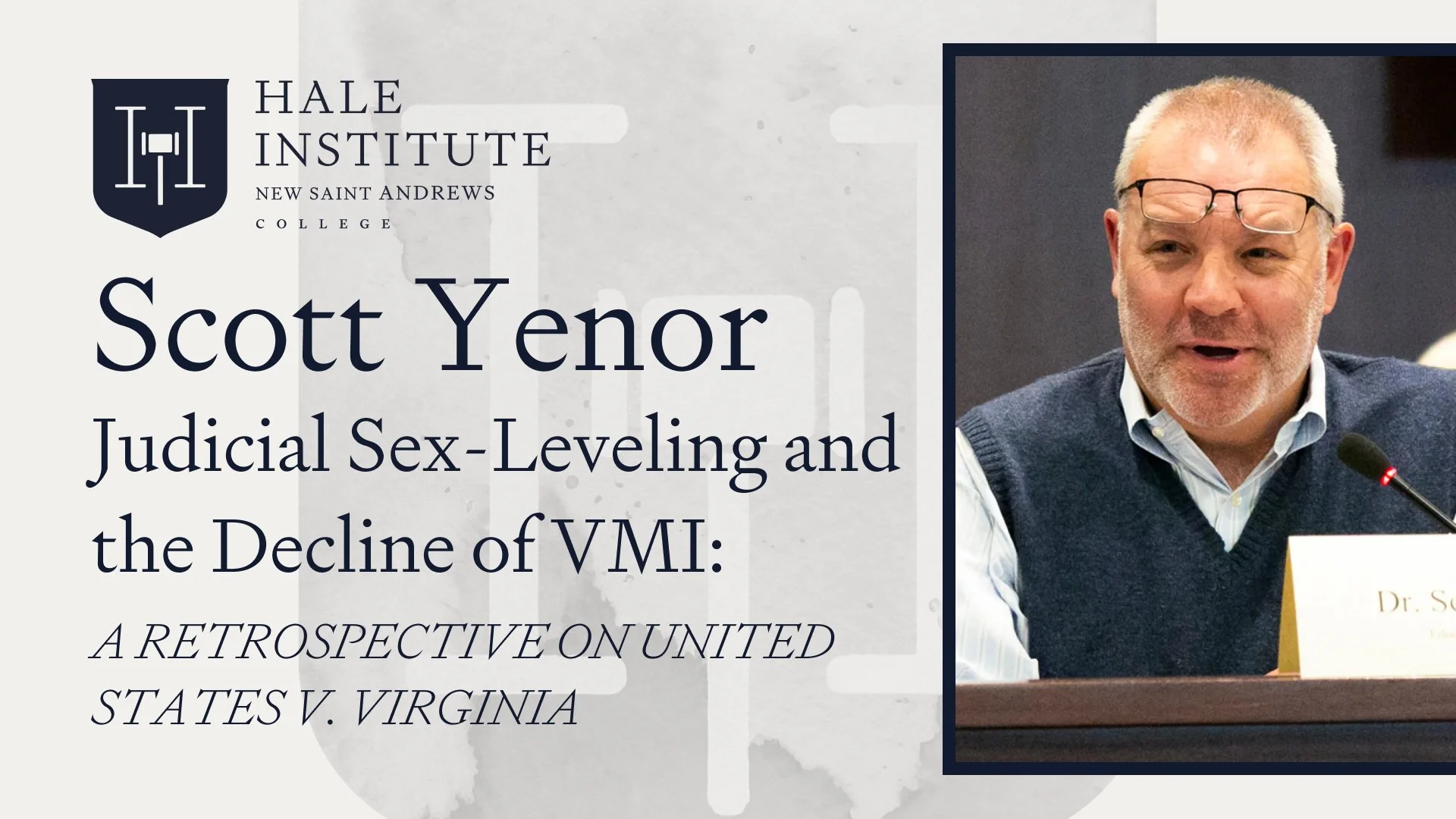
On Thursday, January 29, 2026, the Hale Institute hosted a lecture and Q&A with Dr. Scott Yenor at The Pierian Gallery in downtown Moscow.
The Virginia Military Institute (VMI), with its mission to produce “citizen-soldiers,” had been an all-male institution of higher education since its founding in 1839. Over a century and a half later, in 1996, the United States Supreme Court ruled that VMI violated the Constitution by denying admission to women. Justice Ginsburg wrote the opinion for the Court explaining its judgment, in what is widely considered to be her most important majority opinion of her 27 years on the Court. That opinion provoked from Justice Scalia a memorably witty and exasperated dissent in which he critiqued the majority opinion for its disdain for our forebears, traditions, democratic process, and even the Court’s own jurisprudence.
Justice Ginsburg concluded her opinion for the Court with the assertion that “[t]here is no reason to believe that the admission of women capable of all the activities required of VMI cadets would destroy the Institute rather than enhance its capacity to serve the ‘more perfect Union.’”
In his lecture considering the VMI case, Professor Scott Yenor set forth his own judgment on Justice Ginsburg’s opinion, and on what, in fact, has become of VMI in the thirty years since. In addition to surveying the Supreme Court’s landmark ruling, he explored its wider impact on our law and social institutions.
* * *
Scott Yenor, Ph.D. is the Director of the Kenneth B. Simon Center for American Studies at the Heritage Foundation, a Washington Fellow at The Claremont Institute’s Center for the American Way of Life, and a professor of political science at Boise State University.
Hale Institute director Jeff Shafer offered introductory comments, followed by Professor Yenor’s lecture and engagement with audience questions.