Law and Excommunication
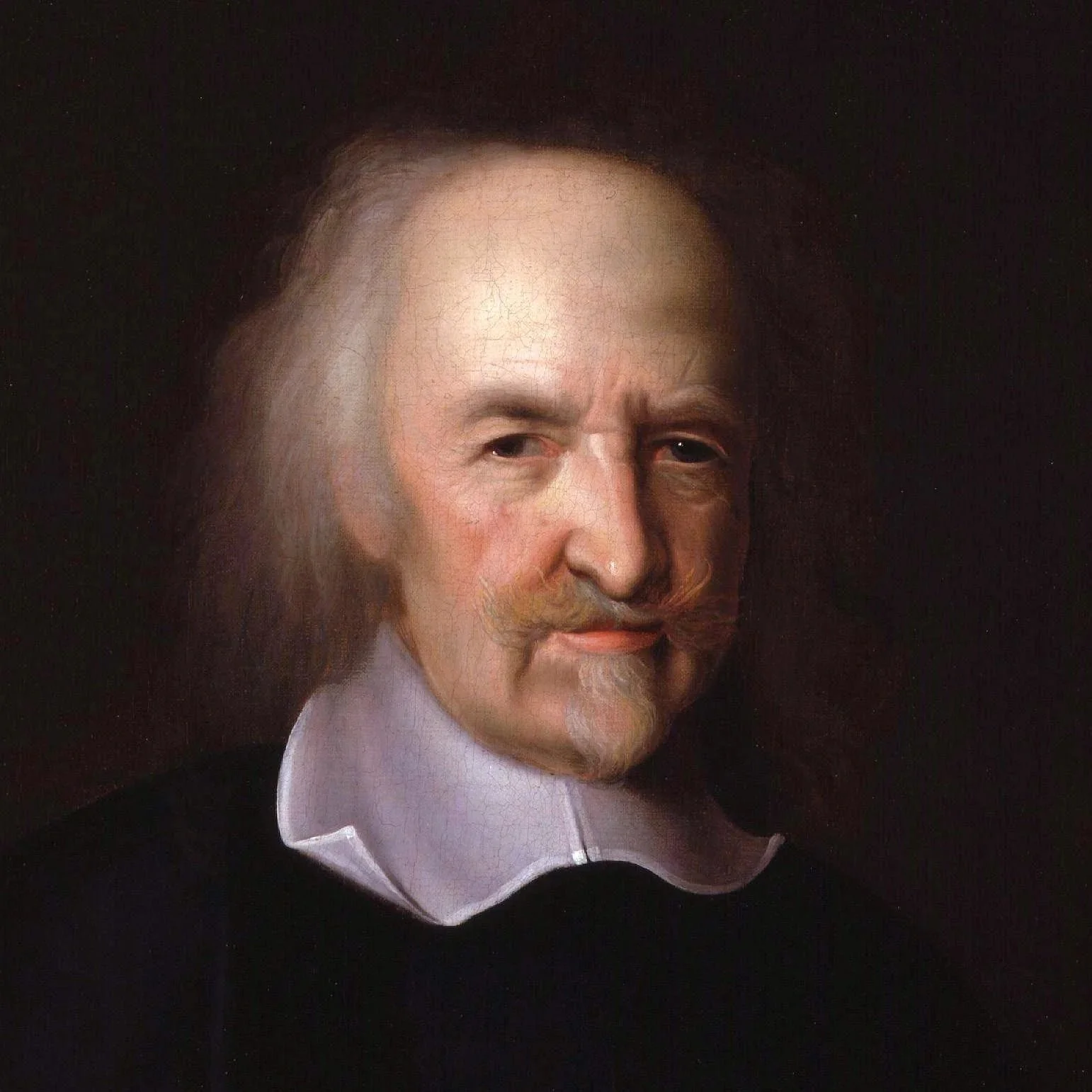
Perhaps only Machiavelli is more notorious than Thomas Hobbes. People know that to be called “Machiavellian” is bad and carries with it some charge of nefarious, conniving, callous activity. To be “Hobbesian” is, colloquially, to be some kind of amoral authoritarian, or something. Whatever they mean, when it comes to politics, both names function as insults. I have contrary opinions about both men, but in any case, both can and should be read with profit. I’ve written about the great Florentine elsewhere. This post is about Hobbes.
Most people don’t actually read Hobbes’ Leviathan and if they do, they don’t make it to the end. That is to say, no one reads Part III, “On a Christian Commonwealth.” Hobbes may be off or wrong about much, but Leviathan is a Christian work. There’s simply no other way to categorize it unless you esoteric it into apostasy. Whether you agree that Leviathan is a Christian work—and thoroughly Protestant work (which it is)—is no matter, however. Hobbes has something to teach you about your own situation today, as a Christian in America.
Hobbes is accused of many things, some of them true, others not. Again, unless you’re sufficiently cynical, Hobbes wasn’t an atheist. One thing he was is an Erastian, a foreign term to most today but an under-litigated early modern ecclesiology. Too often, in triumphalist accounts, it is treated all too simply as obviously incorrect and underhanded. You will search in vain for a serious, scholarly defense of it. Someone once said that it is great fun to take sides in the Wars of the Roses today because no one cares if you support the House of York or Lancaster or whether you find the Tudor succession illegitimate. Similarly, your Bible translation preferences do not matter now near as much as they did in 1844. You won’t suffer socially (or physically) for your position. Early modern ecclesiological debates a little like that—more real to the happy few of us than others—except that recently, with the introduction of Christian nationalism discourse, I’ve seen “Erastianism” thrown around a bit again. What a time to be alive.
As the historian D.G. Hart has explained, “while Erastianism technically involved disputes about admission to the Lord’s Supper [and excommunication], it also became synonymous with a view of church-state relations that granted the state powers of surveillance within the ecclesiastical sphere.”
In other words, on the broad definition, “Erastianism” is a catchall for any ecclesiology that involves civil authority. (Francis Turretin, for example, includes the “political government of the church” under his ecclesiology heading but I’ve never seen him accused of Erastianism by historians even though he defended the Henrician Oath of Supremacy.)
On the narrow definition, the one that has anything to do with the opinions of Thomas Erastus, Erastianism is the view that the church possesses no inherent, scriptural power to excommunicate or restrict access to the sacrament. Therefore, discipline is left to civil authority.
There are myriad problems with the broad definition of Erastianism, namely, that it is both over and under inclusive. “Surveillance” is also a modern term with many decidedly (and rightly) negative connotations in our post-Patriot Act context. Supervision is probably a better term to express sixteenth and seventeenth century sentiments. By “powers of surveillance,” Hart means “a civil magistrate having power to maintain, protect, and intervene within the church.” This was a not just a common early modern Protestant view but the view. As Hart concludes, on the basis of the broad definition of Erastianism, the Westminster Confession was evidently Erastian.
On both counts Hobbes was Erastian, but not exactly a doctrinaire disciple of Erastus himself. The Erastianism of Hobbes is practical or realist. Looking to our own legal landscape as we will shortly, we might query (as realists) whether every regime wherein the church has rights, privileges, and protections is Erastian. More provocatively, we will see that whatever the power of the keys grants to the church, she is completed in her exercise by the state, and by providential design. In other words, as a descriptive matter, Hobbes was right.
Hobbes does not outright deny that the church has the power of excommunication as Erastus did (on exegetical-historical grounds). To be clear, Hobbes is no friend to Papists or Presbyterians—to him, they were the same. His Erastianism is rooted elsewhere, however. In Hobbes we see the animating Erastian concern, viz., clerical power. For Hobbes, as with other Protestants, ecclesiastical power is only the power to teach (or preach), to proclaim the kingdom of Christ. There is nothing coercive in it. Accordingly, the ecclesiastical power cannot consummate excommunication on its own.
The root of excommunication was the Jewish custom of casting the unclean out of the synagogue. In 1 Corinthians 5, it was disassociation (confirmed by Matthew 18:17). But the early church had no power to keep the excommunicated out of their assemblies. Hobbes points out that prior to his conversion, Paul freely entered Christian gatherings to apprehend them (Acts 9:2). Where civil authorities do not assist the church, excommunication is without effect because the church lacks coercive power. It is then no more than avoiding the company of those cast out. If someone was a true Christian, this shunning would, obviously, have the intended effect, viz., of leading the accused to repentance. Delivering someone over to Satan only impacts those who believe this is possible.
But if the accused were a true apostate, then it would have no effect, “neither of damage in this world, nor of terror.” “Excommunication therefore had its effect only upon those, that believed that Jesus Christ was to come again in Glory, to reign over, and to judge both the quick, and the dead.”
Hobbes also narrows the basis of excommunication. Injustice (Matthew 18) and scandal (1 Corinthians 5:11) are the primary causes. But excommunication of anyone “that held this foundation, that Jesus was the Christ, for difference of opinion in other points, by which that foundation was not destroyed, there appeareth no authority in scripture.” Rather, admonishment of less fundamental heterodoxy is the proper course. Foolish or unlearned discourses and questions are simply to be avoided (2 Timothy 2:23) or set aside (Titus 3).
In these passages, Hobbes takes avoidance or rejection to be different than excommunication. The idea is that heterodoxy on points of doctrine other than Christ’s divinity, incarnation, and resurrection should be handled first through admonishment and then, if admonishment does not prove productive, through avoidance of the dispute. Hobbes, like other Englishmen of his day, worried about the creation of “new articles of faith, by determining every small controversy, which oblige men to a needless burthen of conscience, or provoke them to break the union of the church.” He pointed to the example of the controversy between Peter and Paul (Galatians 2), as an example: “[T]hough their controversy were great, yet they did not cast one another out of the church.” For Hobbes, any true Christian is not subject to excommunication on account of doctrine and any false Christian doesn’t care. Excommunication for injustice and scandal is preempted by civil punishments for the same. So, excommunication is superfluous.
Hobbes raises another problem with excommunication. If you have multiple churches simultaneously and mutually excommunicating one another, passing members around, and not recognizing and enforcing the bans of excommunication from the other, excommunication becomes null. Think of modern America. In a pluralist, religious buffet, the ability to church (or denomination) hop defeats excommunication. If a Baptist church excommunicates a member but they can just go down the street and join the nondenominational mega church, excommunication has not ostracized the condemned from all Christian company, nor protected the broader Christian church from unjust, scandalous, heretical persons. If, on the other hand, NAPARC churches consistently honor the church discipline of other member churches then Hobbes would call this one church. But, unfortunately, NAPARC is not the established religion, so the availability of other churches still fails the Hobbesian test.
There’s a bigger problem. Excommunication entails not keeping company or associating with those cast out. How do you do this if a “sovereign prince” or parliament is excommunicated?
“For all Subjects are bound to be in the company and presence of their own Sovereign (when he requireth it) by the law of Nature; nor can they lawfully either expel him from any place of his own Dominion, whether profane or holy; nor go out of his Dominion, without his leave; much less (if he call them to that honor,) refuse to eat with him. And as to other Princes and States, because they are not parts of one and the same congregation, they need not any other sentence to keep them from keeping company with the State Excommunicate.”
You can’t actually excommunicate a prince, and the purpose of papal excommunications of princes was obvious: to instigate war and overturn kingdoms, which is why Richard Baxter (no friend of Hobbes) advised against it. “Nor is the Excommunication of a Christian Subject, that obeyeth the laws of his own Sovereign, whether Christian, or Heathen, of any effect,” adds Hobbes. This is because a professed Christian cannot be excommunicated until his actions prove unjust or scandalous (until “hypocrisy appear in his manners”). But said actions or manners also offend the laws of the commonwealth. Hobbes’ point is that excommunication is simply following civil laws.
“In sum, the Power of Excommunication cannot be extended further than to the end for which the Apostles and Pastors of the Church have their Commission from our Saviour; which is not to rule by Command and Coaction, but by Teaching and Direction of men in the way of Salvation in the world to come… Excommunication therefore when it wanteth the assistance of the Civil Power, as it doth, when a Christian State, or Prince is Excommunicate by a foreign Authority, is without effect; and consequently ought to be without terror.”
All this to say, Hobbes’ insight is that excommunication is dependent on civil sanction or reinforcement. Hobbes does not say that excommunication is superfluous, only that it requires this support for its perfection. Obviously, and again, Hobbes is preoccupied with refuting the power exercised by the papacy—the main point of all of Part III of Leviathan—as most Protestants writing on political and ecclesiological subjects were at the time. But this concern does not limit Hobbes’ insight.
Hobbes accurately describes the condition of the American church(es). Recognition of the dependence of church on the state to fulfill its mission is important. As Baxter, William Perkins, and others recognized, the rise of Christian magistrates was providentially purposed from the beginning for the spread of the gospel and the flourishing of the institutional, visible church too. This is why Turretin and others would describe the state as a “guest house” or “nursery” for the church. There is a sense in which Christian nations and Christian governments perfect the operations of the church, her government and discipline even unto internal matters. In a Christian commonwealth, the church is capable of functioning at full capacity, we might say.
Consider briefly the legal basis of and protections for churches in America that make church discipline possible. In light of the recent invasion of Cities Church in Minneapolis, the legal classification of churches and church property is of public relevance again.
Indeed, laws surrounding churches and their property incentivize strong membership restrictions and discipline. Generally speaking, churches are private property. So long as churches restrict the use of their facilities to members in good standing or those of alike faith and practice instead of treating it like any other community facility, they avoid federal public accommodation laws. This, in turn, allows them to discriminate between members and non-members on a doctrinal or moral basis. In other words, churches don’t have to behave like hotels or restaurants. (Other statutes protect churches from disruption of their services.)
If a church excommunicates a member and that member refuses to leave or insists on reentering the premises for weekly services, the church can call on the civil authorities to arrest the person for trespassing. Without this assistance, the church would have no way of carrying out excommunication beyond the voluntary consent of the excommunicated party. On the front end, churches are able to set their own religious standards for both membership and hiring, and the ministerial exemption protects the relationship between churches and their pastors. External or public ministries of a church, like soup kitchens, cannot discriminate.
This is all a modern explanation of Hobbes’ point of the necessity of civil authority for excommunication. If the civil authority either withdraws support or persecutes the church, real excommunication is impossible.
Consider the trajectory of state and local civil rights laws in some jurisdictions (the federal RFRA doesn’t apply to the states). Churches and other private organizations may be exempt from federal accommodation laws in most cases, but states and municipalities can be more inclusive in their measures. Bostock v. Clayton County (2020) miraculously found employment protections for sexual orientation and gender identity in the Civil Rights Act of 1964 (Title VII). What if churches were not exempt from a similar “protection” in public accommodations and, therefore, disallowed from excommunicating a transsexual? It may still make sense to most people (for now) that a Christian church should not be forced to permit Muslims to join their church. But what about a homosexual or transsexual that still claims Christianity?
Religious exemptions from public accommodation laws are not at all uniform across the country. Idaho’s antidiscrimination law, for example, allows for employment discrimination by religious organizations on the basis of religion, but includes no such exemption in its public accommodation statute. Some but not all states include provisions that allow religious organizations to limit admission to co-religionists. But this isn’t even the real complication in our hypothetical. New York, for example, provides exemptions for religious organizations in its Civil and Human Rights Laws wherein churches can discriminate in favor of their co-religionists. But what about a liberal, LGBTQ Christian of, let’s say, James Talarico’s doctrinal flavor? New Mexico, to provide a counter example, exempts churches and religious organizations from its LGBT antidiscrimination law even in real estate rentals, but not on goods and services otherwise available to the general public. (Surprisingly, Connecticut arguably has the broadest, most comprehensive exemptions.)
In other words, the private activity of churches is protected but not its public activity. The spectrum between determination of membership and denial of services is the main source of inquiry for most legal observers. All of this is dependent on a fragile public-private, religious-secular distinction, one that is increasingly less dependable as the status of religion is depleted.
All freedoms are equal; some freedoms are more equal than others. The Hobbesian reality will be further demonstrated as the freedoms of religion and “equality” clash. Exemptions will only go so far and for so long. This is an inherent defect: exemptions reinforce a public morality from which the exempted party is deviant. Reliance on exemptions is reliance on the tolerance, patience, and good will of those granting the exemptions. Nothing about the recent events in Minneapolis suggests that this is a winning long-term strategy.
The Fulton v. City of Philadelphia (2021) case was a win for Catholic Social Services but revealed the clash of two orthodoxies: religion and equality. The two have different, mutually exclusive standards of inclusion and exclusion. As reactions to Fulton demonstrated, the clash between religious objections to homosexuality and government rules prohibiting discrimination against the same will continue and patience for narrow free exercise claims is running out. It is entirely conceivable that what happened to Jack Philips could happen to a whole church.
To stay Hobbesian for a moment longer, in one possible dystopian future, churches are not able to excommunicate at all, not even the drag queens. Don Lemon could insist on membership and communion, maybe even ordination, at Cities Church and no one could stop him. He claims he is a Christian, after all. Always and everywhere, the church is dependent on the civil authorities to enforce her borders. Without civil support, and certainly under civil persecution, Hobbes shows that church discipline is unenforceable beyond the soft power of a social ghetto.
Those Christians who cheer on the downfall of Christendom and the decline of cultural Christianity (and the unique legal preferences Christianity used to enjoy) should consider the Hobbesian insight above. Most of the Russell Moore types appeal to the purity of church membership when bashing public, cultural Christianity. If there are no social benefits to being Christian, then there will be no hypocrites in the church, they argue. Christianity must, therefore, be de-normalized for the sake of the internal integrity of the church. Have they considered that in a totally demoted socio-political status, the church would be incapable of keeping heretics out altogether?
Appeals to the first century church will come up empty. On this side of Christendom, dynamics are entirely different because the deities are different. The sacramental practice of nondiscrimination (equality) demands enforced conformity not through tithes or sacrifices to the guild god or the Roman emperor, but through inclusion of all.